
What is insulated glass?
Gas-filled insulating glass, also known as insulating windows, usually consists of double- or triple-pane windows in which the space between the panes is filled with an inert gas. They consist of two or more glass panes sealed together, with a space between them filled with an insulating noble gas, usually argon or krypton.
This gas-filled space reduces heat transfer, thereby improving the window's insulating properties. It also dampens sound, making insulated glass a practical choice for noisy areas.
Gas-filled insulated glass units are an environmentally friendly and energy-efficient alternative to traditional single-pane windows. They help retain heat in the winter and keep interiors cool in the summer, which can significantly reduce heating and cooling costs.
All in all, gas-filled insulated glass units are an excellent choice for improving a building’s energy efficiency and comfort, and they provide effective thermal and sound insulation.
- The windows use insulated glass units in which the space between the panes is filled with an insulating gas (e.g., argon, krypton) instead of air
- Triple-pane and double-pane glass (with one or more layers of insulating gas)
- The impact of the insulating gas on a window’s energy efficiency is typically over 20%
- Not all windows are tested for insulating gas at the factory, and the insulating glass units may be supplied to the factory by a foreign subcontractor
- The gas concentration typically decreases by 1% per year, but this is influenced by factors such as wind and solar exposure, window quality, and so on.
- There may be one or more measurement points
- A clear report on the results, making it easy to plan next steps
How is the measurement taken?
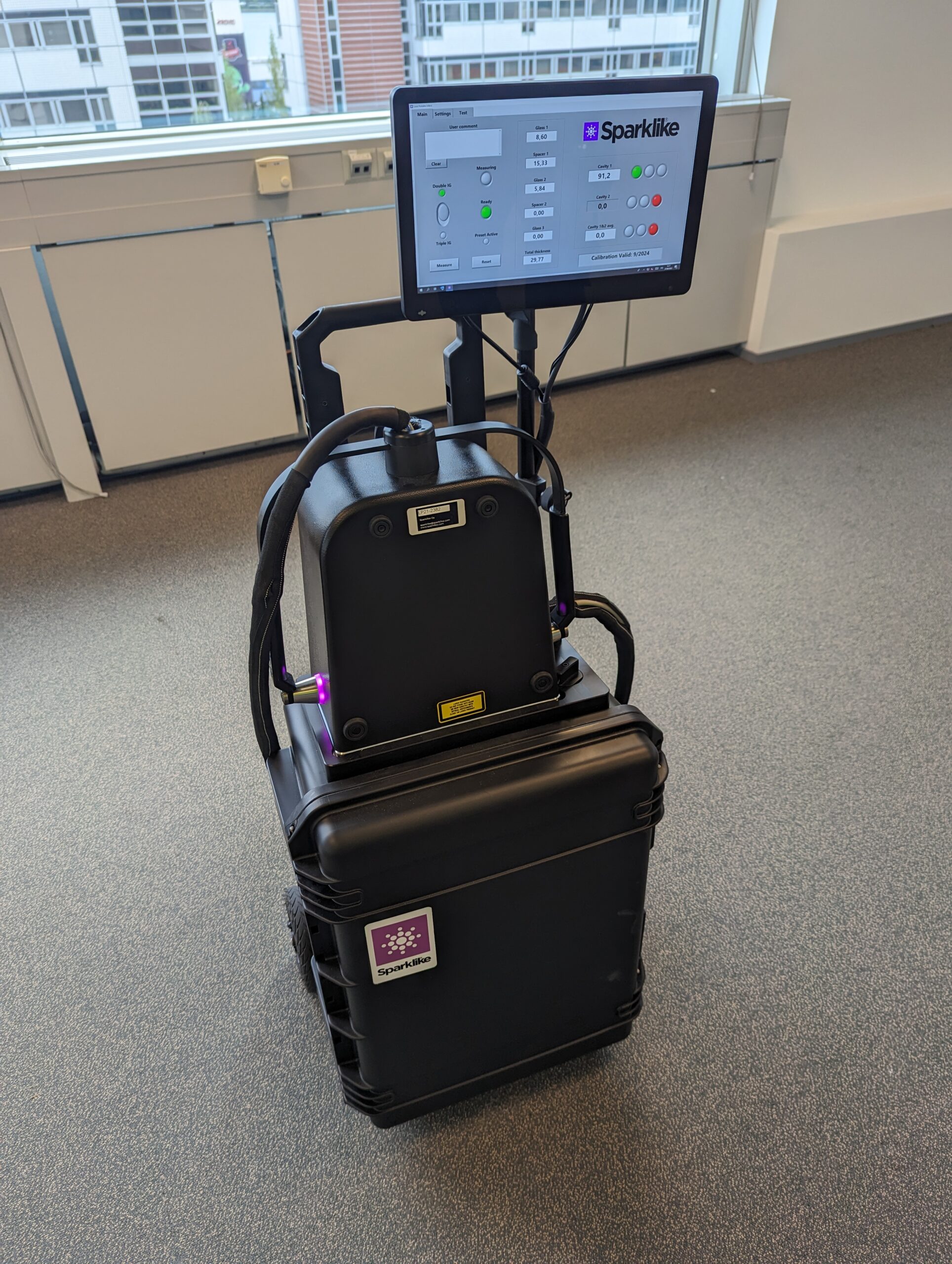
- The same method is used as at the factory. The surveyor carries a portable version of the laser measuring device (Sparklike portable).
- Measurements are usually taken from the inside; during construction, measurements can be taken before installation on the frame
- Measurement is fast and cost-effective
- All windows can be measured, or a suitable sample can be taken, and the sample size can be expanded if necessary

What does the measurement reveal?
- Insulation gas concentration (%)
- Glass structure, i.e., glass thicknesses and spacer thicknesses
- Calculated U-value and energy loss (kWh)
- This can be combined with thermal imaging, which reveals air leaks in the frame and seals, while insulating glass testing assesses the performance of the glass unit itself
When is it a good idea to take a measurement?
-The window is delivered to the construction site or has been installed in the frame (gas fill over 90%)
- Installation measurements can be performed in conjunction with our other services
- 2-year warranty measurement, if no installation measurement has been performed
-Other external cause
- problems (drafts, condensation on the inside of the glass)
- in connection with energy audits or energy efficiency projects
- thermal imaging or airtightness testing of a building
- as part of a renovation project
- Planning a window replacement
- sale of real estate (technical due diligence)
– 15–30 years after installation
- life cycle assessment
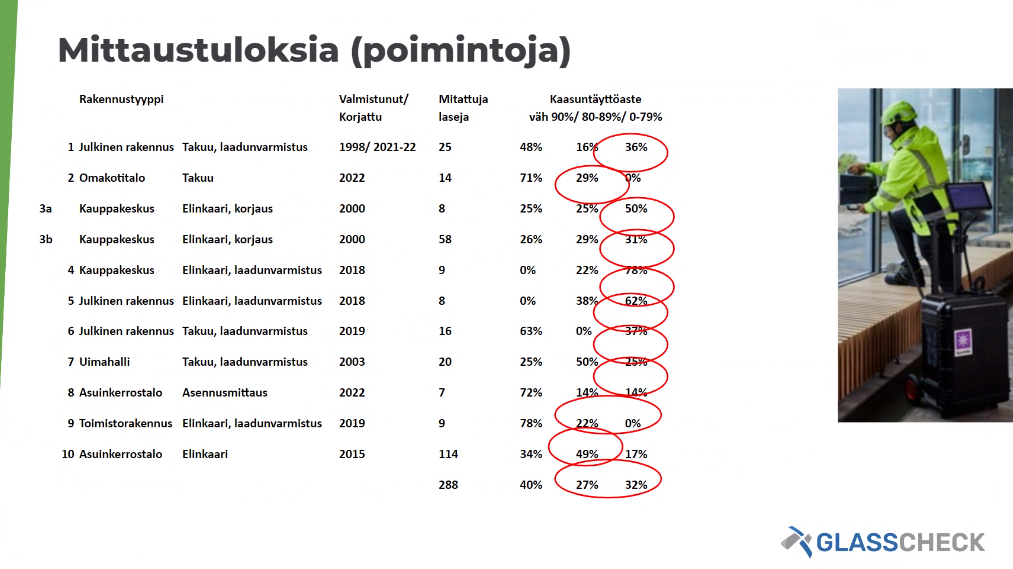
Defects in gas fillings observed in new and warranty service cases