
The service includes
- Measuring pressure differences using a data logger over a 2-week period
- We also perform one-time pressure differential measurements, but we recommend using a data logger for the measurement, as pressure conditions vary
- Logging pressure differentials every minute
- Monitoring temperature and humidity conditions in the same
- The base price includes 2 loggers; additional loggers are available at an extra charge
- There may be one or more measurement points
- Wireless system installed and delivered to the site
- A clear report on the results, including all the raw data, making it easy to plan next steps
- If necessary, especially for longer-term projects, it is possible to obtain access to software that allows you to monitor results in real time
Please contact us for more information or to request a quote.
When is the measurement taken, and what is the correct pressure ratio for the building?
The pressure balance in a building is a key factor that must be maintained, in addition to other basic conditions such as temperature and humidity.
Pressuremeasurements are often performed in buildings as a quality assurance measure or, in the case of renovation projects, as a starting point for renovation planningor when problems are detected. Even expensive repairs are of no use if the basics are not in order first, so pressure conditions should be determined before significant ventilation or indoor air quality repairs and verified after the repairs are completed.
The pressure conditions inside a building should generally be close to zero or slightly negative. Positive pressure, for example, allows moisture to penetrate building structures, while excessive negative pressure draws pollutants and radon into the indoor air and makes it difficult to open doors and windows. In addition, excessive pressure differentials—especially when combined with air leaks—lead to poorer energy efficiency and drafts.
The building has a mechanical ventilation system—isn't that enough?
When adjusting a building’s ventilation, pressure differentials across the building are not typically verified; instead, ventilation is adjusted according to the plans: generally, the exhaust air flow is designed to be slightly greater than the supply air flow, so that the building or space should be under slight negative pressure.
However, even in new buildings, the system can easily end up with excessive positive or negative pressure if this has not been verified through measurements. Pressure conditions can also vary significantly between different rooms in a building. This is particularly evident in airtight buildings. Pressure differential measurements are therefore used to verify the functionality of the ventilation system in terms of pressure conditions.
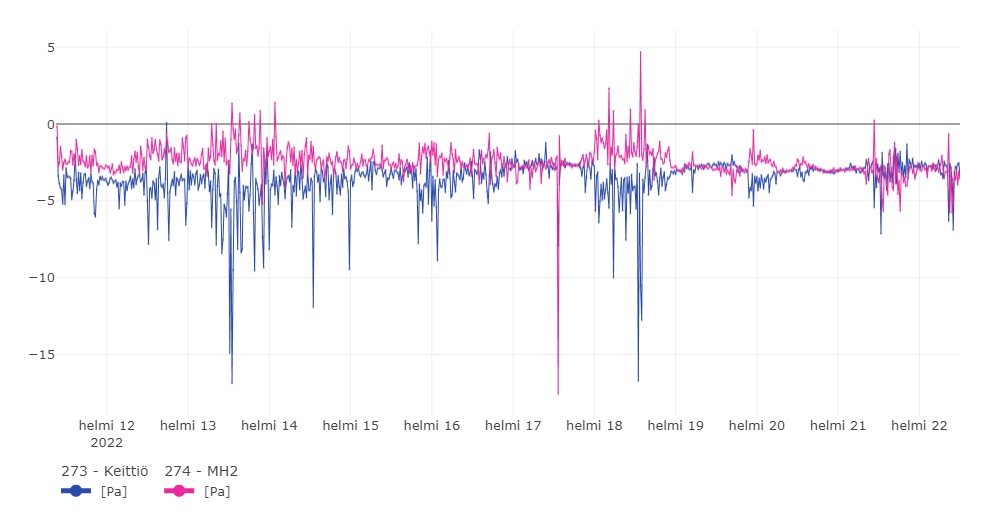
Professionals will help you interpret the test results and advise you on the necessary steps to take
Pressure differential measurements are performed in new construction or warranty projects as a quality assurance measure, or in renovation projects, often as a basis for repair planning or when problems are detected.